


Your cart
0
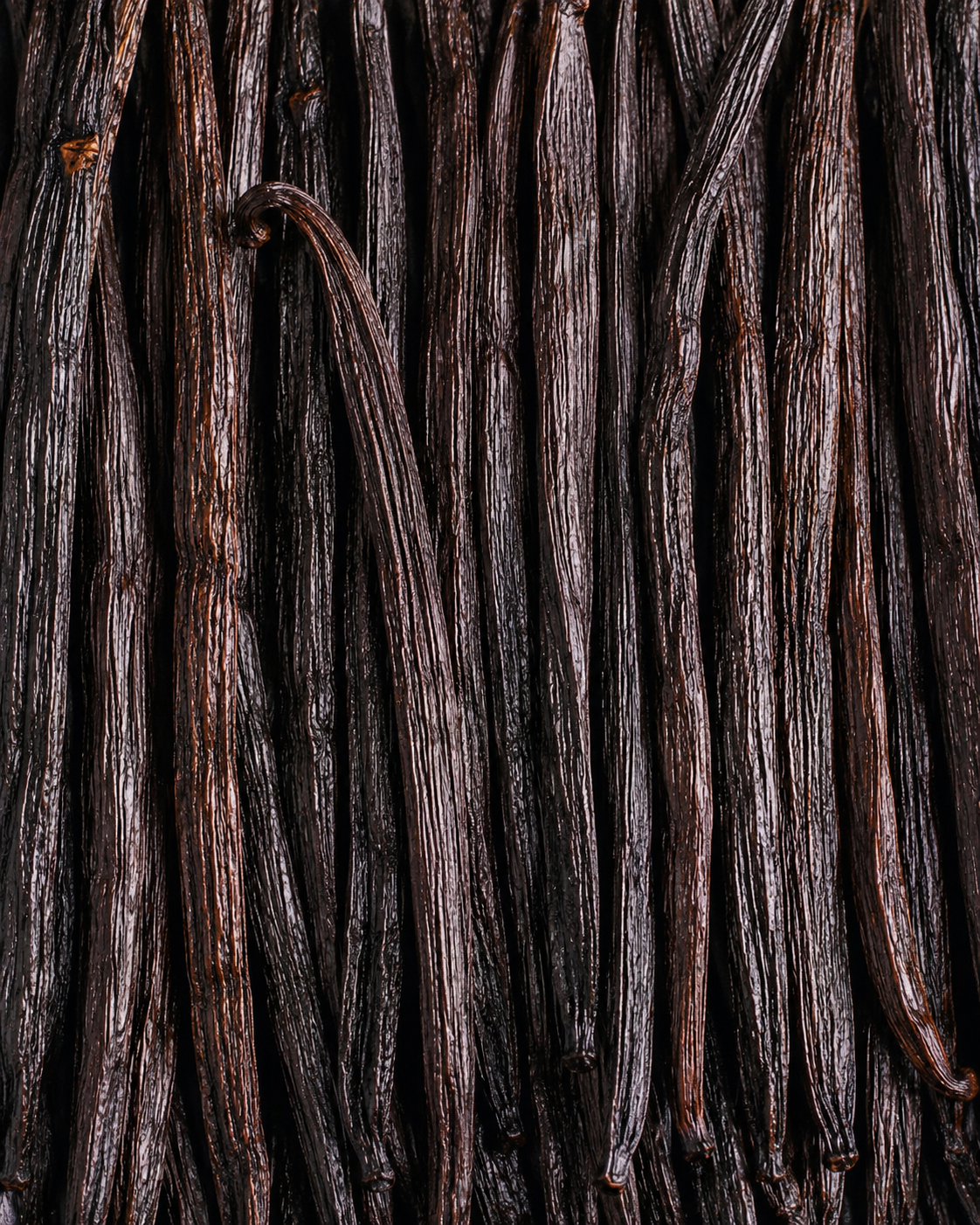
Ask why vanilla is so expensive and you'll probably guess wrong, most people do. It isn't rarity for rarity's sake, and it isn't a marketing story dressed up to justify a price tag. Vanilla is, by weight, the second most expensive spice on earth, right behind saffron, and the reason has almost nothing to do with how you use it and everything to do with how the world grows it in the first place.
Why Vanilla Is the World's Second Most Expensive Spice
Vanilla comes from an orchid, and orchids play by their own rules. Each flower opens for a matter of hours, once, and in most growing regions it has no natural pollinator waiting for it. Every pod that eventually becomes vanilla extract, vanilla absolute, or the vanilla note you catch in a fragrance was pollinated by a human hand, working in that narrow window before the flower closes for good.
That single fact answers why vanilla is so expensive before you even get to any other factor. There's no mechanizing a flower that blooms once and needs someone standing right there at the exact right moment.
The Hidden Labor Behind Every Vanilla Pod
Pollination is only the beginning. Once a vanilla pod is pollinated, it needs close to nine months on the vine before it's ready to pick, and once it's picked, the real transformation starts. Curing takes weeks: the pods are sweated, dried, and rested by hand in cycles, developing the color and aroma you'd never find in the raw green pod.
Add a crop concentrated in a handful of regions, Madagascar chief among them, exposed to cyclones and unpredictable harvests, and you start to see why the price holds. Every dollar you spend on true vanilla is paying for months of patient, specific, human attention, not a shortage engineered for effect.

Real Vanilla vs. Vanillin: What You're Actually Smelling
Most things labeled "vanilla scented" contain no vanilla at all. What you're smelling is usually vanillin, a synthetic aroma molecule that recreates one dimension of vanilla's character: sweet, familiar, mostly flat. It's stable, inexpensive, and everywhere, which is exactly why it dominates candles, sprays, and mass-market fragrance.
Vanilla absolute, drawn from the cured bean itself, is a different substance entirely. Instead of one note, you get a chorus: something dried and fruited, something faintly smoky, an undertone that reads almost like aged wood. That's the difference between a scent that references vanilla and one that actually contains it, and it's why niche perfumers treat real vanilla the way a sommelier treats a rare vintage.
Why Vanilla Never Smells the Same Twice
Vanilla rarely appears alone, and that's exactly its talent. Pair it with spice and warmth and you get something bold, a little unpredictable. Pair it with clean, skin-close materials and it softens into something quiet and intimate, worn more for you than for the room. Same ingredient, radically different mood, depending entirely on what you put next to it.
This is also why "vanilla" as a search term covers such different territory. A gourmand fragrance built on vanilla can land anywhere between a dessert-adjacent sweetness and something closer to skin and musk, and the genre alone won't tell you which side you're getting. Only the full composition will.

How soul of scents Approaches Vanilla
Within the soul of scents collection, you'll find vanilla showing up in more than one register, and each one earns its place differently.

Va Va Vanilla, by Sarah Baker, sits in a gourmand direction with Main Character energy: built to be noticed, not to fade into the background.

Chemin D'Amande, by Une Nuit Nomade, leans rich, warm, and spicy, with the same vanilla-adjacent sweetness running underneath a more resinous frame.

Katz!, by pour toi, keeps vanilla close to your skin. Its composition combines gourmand with intimacy, a clear Second Skin kind of scent: quieter, more private, built for proximity rather than projection.
Three executions, one shared ingredient, three entirely different moods you get to choose between. That range is the clearest proof that vanilla is never one-dimensional.
Choosing Your Own Vanilla Direction
If you're drawn to vanilla but unsure where to start, the useful question isn't "do I like vanilla." Almost everyone does, unless you're picturing the stuffy, artificial scent that comes with a new car. The better question is which mood you want vanilla to carry for you: bold and front and center, warm and spice-laced, or quiet and close to your skin. That single distinction narrows your search more than chasing a single ingredient ever will.
Frequently Asked Questions
Why is vanilla more expensive than most spices?
You're paying for an orchid that must be hand-pollinated within hours of blooming, then cured for months before it's ready to use at all.
Is vanilla really the second most expensive spice in the world?
Yes. Only saffron typically ranks higher by weight, and vanilla has at times climbed even past that during difficult harvest years.
What's the difference between vanilla and vanillin?
Vanilla absolute is a natural extract carrying many aromatic compounds, while vanillin is a single synthetic molecule that mimics only vanilla's sweetness.
Does natural vanilla smell different from synthetic vanilla in perfume?
You'll notice natural vanilla reads as layered and complex, while synthetic vanillin usually smells simpler and more purely sweet.
Why does vanilla smell different in every niche perfume?
Because it's almost never worn alone. What you smell depends on what's placed next to it, from warm spice to clean, skin-close materials.
What is bourbon vanilla?
Bourbon vanilla refers to vanilla grown in Madagascar and the nearby islands, historically called the Bourbon Islands, and widely considered some of the richest vanilla available.
Is vanilla a gourmand fragrance note?
Often, yes. Vanilla anchors many gourmand fragrances, though you'll also find it in warmer, spicier compositions and quieter, skin-like ones.
Why do niche perfumes use so much vanilla?
Because a well-sourced vanilla absolute adds a depth and complexity that synthetic vanillin can't replicate on its own.
Can vanilla fragrances be worn year-round?
Yes. Lean lighter and closer to your skin for warmer months, or bolder and more resinous once the weather turns colder.
What should I look for in a quality vanilla perfume?
Look for depth over sweetness. If a vanilla reads as one-note sugar, you're probably smelling vanillin. If it reads complex and a little unexpected, real vanilla is doing the work.
The Takeaway
Vanilla earns its price the hard way, through human hands, patient months, and a fragile harvest you rarely think about while reaching for the bottle. That's exactly what makes the real thing worth seeking out: not the flattened, one-note version, but a vanilla with somewhere to go, capable of sitting boldly at the center of a scent or staying close and quiet against your skin, depending on what you pair it with.
If you're curious which interpretation of vanilla suits you, keep an eye out for our Resin & Heat category.

